Contact us
You are currently on the Australian website
Welcome to Furnware — If you are outside of Australia, we recommend changing your region below for the most suitable content.
or
Change region
-

Planning your classroom for Term 1

  • Ideas & Planning
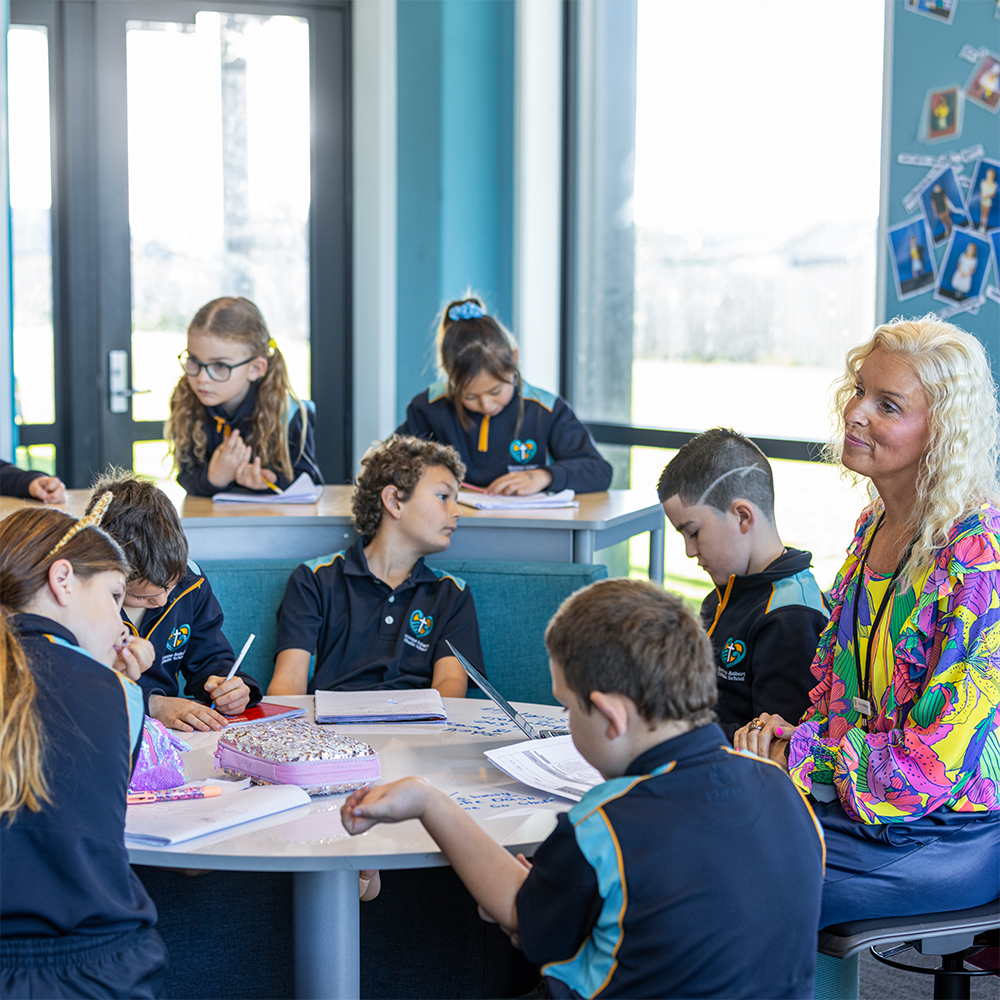
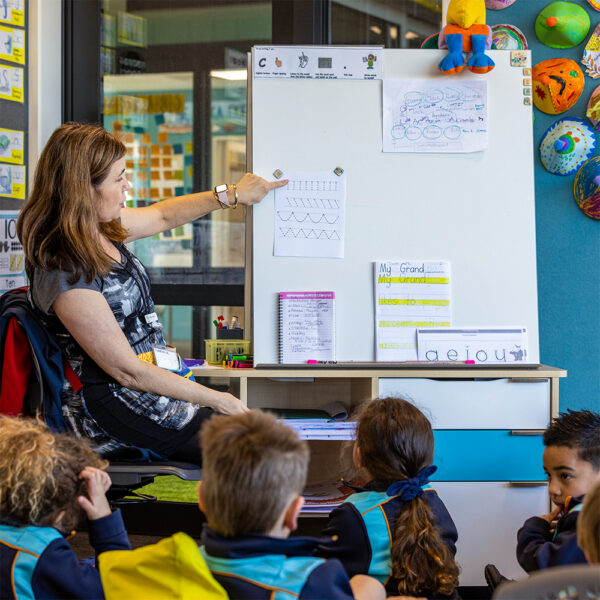
Teacher working with students around a shared table with curved upholstered seating at Putaruru Primary.

Share this article

On this page

Are your rooms set up to support the way you teach?

A new school year is an opportunity to see how well each space supports your learners and your approach to teaching.

  • Can students see and hear the teacher clearly?
  • Can teachers move between whole-class teaching, guided practice and individual support?
  • Are there places to work independently without distraction?
  • Does the furniture fit students and let them move comfortably?

A well-planned classroom provides structure when teaching requires focus, and adapts when the learning activity changes.

Start with how the room needs to work

Before choosing furniture, think about what needs to happen in the room. During a typical school day, teachers may need to move between:

  • Explaining and demonstrating to the whole class
  • Practising together as a class
  • Working in small groups
  • Providing one-to-one support
  • Monitoring independent practice

The classroom needs to support these activities. That may come down to clear sightlines, the right furniture in the right place and defined areas for different types of work.

Supporting explicit teaching in the classroom

Explicit teaching is already well established in Australian schools. The question is whether classroom layouts support each part of the lesson.

Students need to see and hear the teacher clearly, and teachers need a good view of the class and space to reach each learner. The room should also support guided practice, independent work and targeted help.

Structure does not have to mean fixed

A structured classroom helps students know where to look, where to work and how to move between activities.

In practice, that might include:

  • Tables facing the main teaching area
  • Clear views of the teacher and board
  • A group table for targeted teaching
  • Quieter places for focused or independent work

Structure does not have to mean fixed

A structured classroom helps students know where to look, where to work and how to move between activities.

In practice, that might include:

  • Tables facing the main teaching area
  • Clear views of the teacher and board
  • A group table for targeted teaching
  • Quieter places for focused or independent work

What to look for in your classroom

These six checks can help you spot what is working and what may need attention.

1. Can everyone see?
Check views of the teacher and board from different seats, and the teacher’s view of the class.
2. What could distract students?
Look for clutter, visual distractions and cramped spaces between desks.
3. Are the areas clear?
Can students tell where to go for instruction, partner practice and group work?
4. Can everyone move easily?
Can teachers reach students, and can learners move safely when activities change?
5. Are resources close at hand?
Can materials be reached without interrupting the lesson?
6. Does the furniture fit?
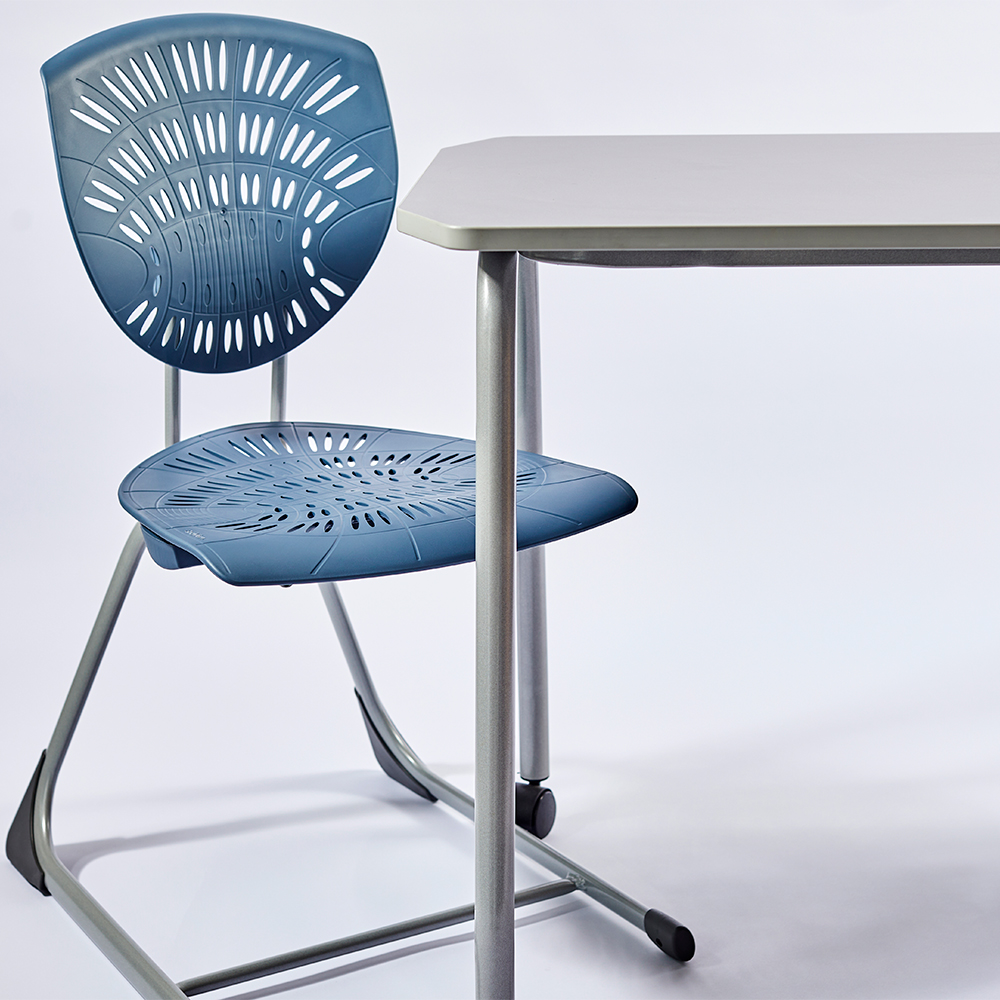
Can students sit comfortably with their feet supported and work at an appropriate height?
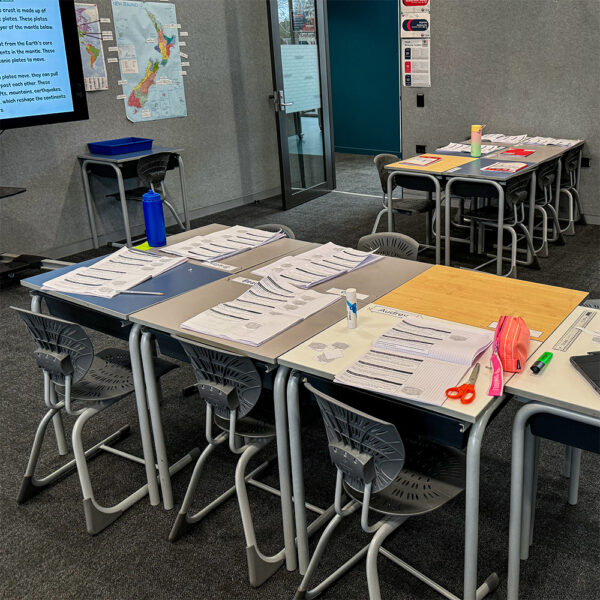
Students seated at rectangular desks in rows, facing a teacher at the whiteboard, with grey Bodyfurn chairs.

A guide to structured classroom furniture

Watch how students use the room

Students often show us when furniture or a layout is not working for them. You may notice:

  • Feet wrapped around chair legs
  • Students kneeling or standing to work
  • Bodies resting across desks
  • Chair tipping

These behaviours can be a reason to look more closely at how the furniture fits the class. Movement itself is a normal part of learning. Look for patterns across the room and consider whether students can move without disrupting others.

Make the most of what you have

Preparing for Term 1 does not always require new furniture.

Start by testing whether the classroom supports the main parts of a lesson. Try moving between whole-class teaching, partner work, small-group work and independent practice.

Observe:

  • If furniture needs to move, how long does it take?
  • Can it be moved safely?
  • Can students still see the teacher?
  • Can the teacher see and reach every student?
  • Are resources easy to access?

A different layout may solve the problem. In other cases, a group table, mobile storage, a screen or a few appropriately sized desks and chairs may help. Open or shared classrooms may benefit from clearer areas for teaching, focused work and small-group support.

When new furniture may help

New furniture may be useful when chairs or tables do not fit students, sightlines to the teaching area are poor, furniture is difficult to move safely, or resources need better organisation and access. Each item should solve a clear problem and work with what the school plans to keep.

A classroom layout brings together the teaching approach, student needs, clear views, appropriately sized furniture, places for different activities, room to move and accessible storage.

Furnware helps schools consider these factors together. Research into how students sit, move and learn shapes the furniture we design. Our team can help plan new classrooms, update open or shared spaces, create small-group teaching areas and improve places for focused work.

We can help you see what is already working, what could move and where new furniture could make a useful difference.
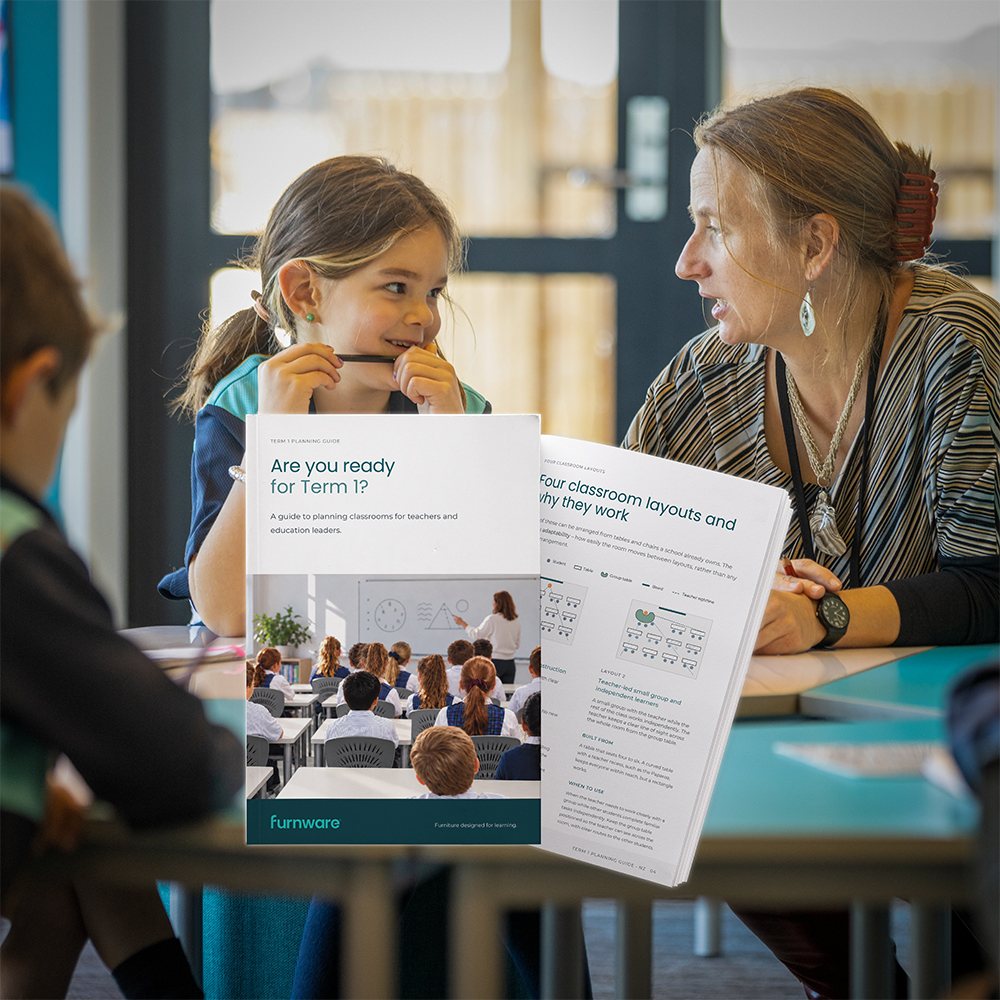
Download the guide and start planning

Planning early gives your school time to review existing classrooms, talk with teachers and support staff, plan rooms around teaching needs, order furniture and arrange delivery and installation around the school calendar.

Delivery for Term 1 2027 – Order before 13 November 2026

Term 1 planning guide cover: Are you ready for Term 1? A guide to planning classrooms for teachers and education leaders.

Term 1 Classroom Planning Guide