Contact us
You are currently on the Australian website
Welcome to Furnware — If you are outside of Australia, we recommend changing your region below for the most suitable content.
or
Change region
-

What is your classroom telling you?

  • Ideas & Planning
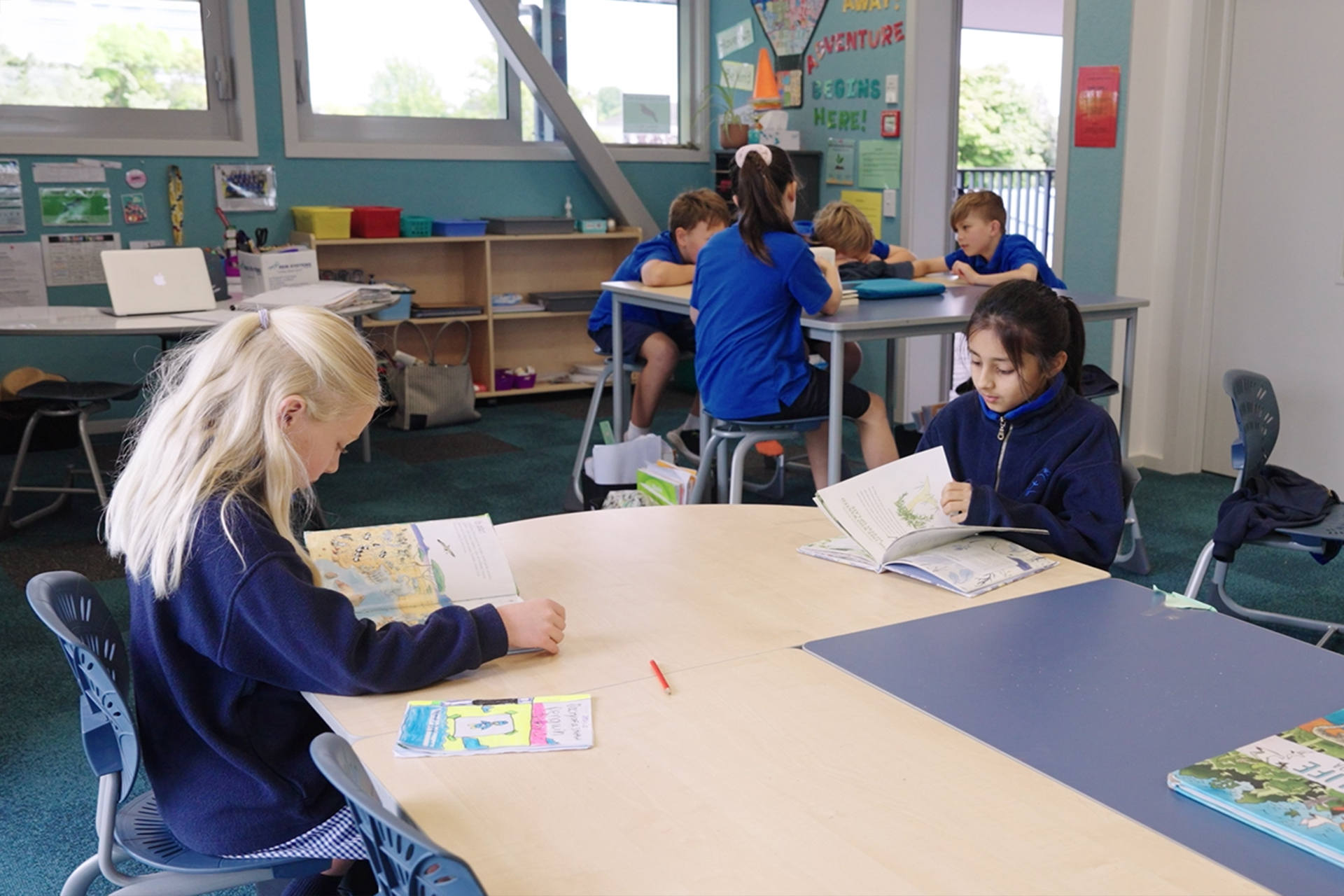
Students reading and working together in an Elmwood Normal School students in classroom with ergonomic Bodyfurn chairs.

Share this article

Explore this article

Common behaviours in the classroom

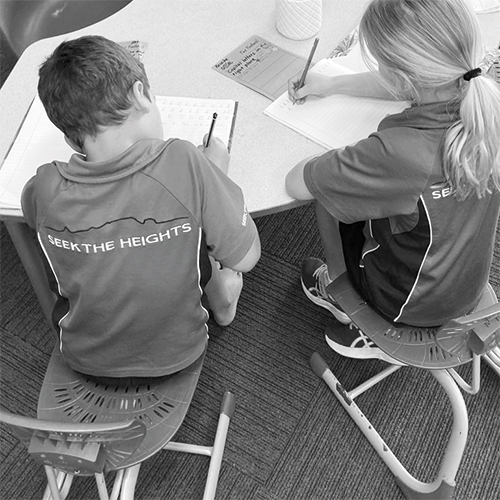
Students come to school to learn. As teachers, we can learn from them too. Noticing how students sit, move and use the room can help us understand how the classroom setup and furniture support comfort, movement and participation.

These observations can inform how we adapt learning spaces as students, activities and teaching approaches change. Over more than 20 years, Furnware has studied how students interact with furniture and their surroundings. These insights help shape our furniture and the way we support schools with classroom planning.

Students do not sit still throughout a lesson. They turn, shift and resettle as they listen, write and work with others. Common behaviours you may notice include:

  • Feet hooked, wrapped or tucked around a chair
  • Kneeling on the seat or standing to write
  • Upper body resting on the desk
  • Chair tipping
  • Frequent changes of position

These behaviours are starting points for observation and conversation. Look for patterns across several students, ask about comfort and consider whether a small adjustment would help.
Understanding what you see

Observe once students have settled into a lesson. Start with a short scan of the whole room, then look more closely at patterns shared by several students. Similar behaviours can have different explanations, including furniture fit, the activity, comfort, tiredness or personal preference.

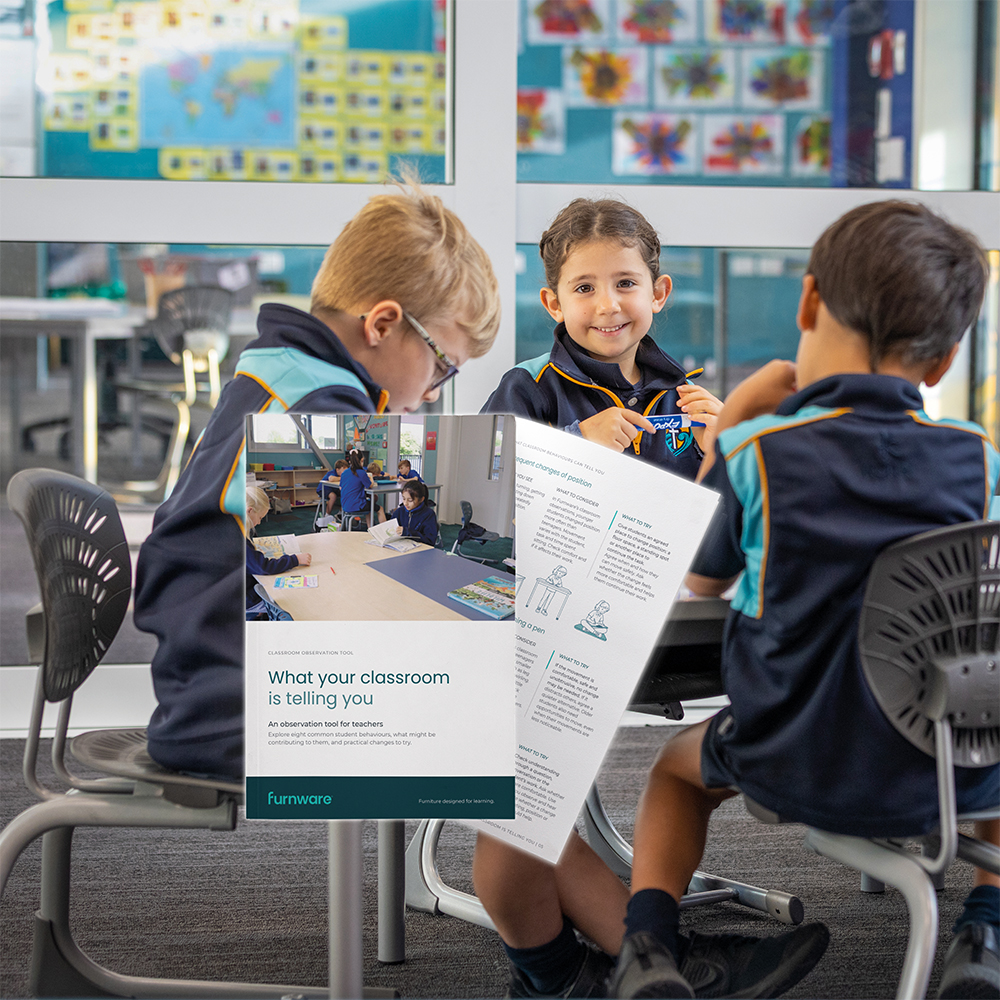
Ask students how they feel, try a small change where useful and observe again. The classroom observation tool can help you record what you see and compare observations over time.

When patterns need attention

A pattern across several students can be a reason to review the room or furniture. For example, a whole-hand pencil grip may reflect developing hand skills. If sitting upright takes considerable effort, seating and stability may also be part of the picture.

Check below the desk as well as at the pencil. Are feet supported? Does the chair fit comfortably? Can forearms rest on the desk without the shoulders rising? Try improving support, then ask whether writing feels easier and notice any change in effort or control.

Movement during learning

Students move as they learn. They may lean forward to work, sit back to listen or turn towards others. Consider whether they can change position comfortably and safely, and whether the movement affects their work or distracts others.

If students start leaning heavily on their desks later in a task, tiredness may be one factor. Ask about comfort, check the height and position of the work, and consider a brief break or change of position.

Feet hooked around chair legs may reflect a search for support or comfort, or simply a preferred way of sitting. If feet are unsupported, try a better-fitting chair or a stable footrest, checking the desk height too.

When to seek support

These observations cannot identify a condition or establish why a student behaves in a particular way. If a student reports pain, is persistently uncomfortable or finds it difficult to take part, follow your school’s usual learning support process and any existing individual support plan. Address immediate safety concerns, including unsafe chair tipping, straight away.

Movement across year groups

In Furnware’s classroom observations, younger students tended to change position more often than teenagers. Older students often showed smaller movements, such as leg shaking or pen twirling.

  • Younger students may need more frequent opportunities to change position. Consider how they can move safely while continuing the activity.
  • Small, quiet movement in older students may need no change if it is comfortable, safe and unobtrusive.
  • Slouching, folded arms or sitting low in a chair give an incomplete picture of engagement. Check understanding through a question, conversation or the student’s work.

Movement varies with the student, task and time spent sitting. Use what you observe and hear to decide whether a change to seating, position or activity would help.

Explore the research behind Bodyfurn®

What to observe in your classroom

A useful classroom review brings together furniture fit, movement, the activity and the wider room. Observe the whole class once the lesson is underway, looking for common patterns.

  • Look at how students use their chairs, desks and resources.
  • Check whether feet are supported, shoulders relaxed and work within comfortable reach.
  • Notice when movement helps students continue their work and when it disrupts others.
  • Take note of noise, lighting, glare, temperature and ventilation.
  • Ask students how they feel, choose one small change to try and observe again.

A well-planned learning space supports students and teachers, offers safe ways to move and can adapt to whole-class teaching, small groups and independent work.

Research behind the observations

Furnware’s classroom observations explore how students interact with furniture, their surroundings and one another. Occupational therapy and physiotherapy specialists from The Kids’ Place helped identify what to observe and later reviewed the findings.

Separate University of Waikato studies have investigated Bodyfurn seating, movement, classroom behaviour and students’ experiences. Explore the research evidence for the findings, methods and limitations, or read the Bodyfurn research story.

Download the classroom observation tool

Explore eight common student behaviours, what might be contributing to them, and practical changes to try. Includes an observation sheet to record classroom patterns and review a change.

Take a closer look at your classroom

Getting ready for Term 1?

Bring your observations into your classroom planning with our Term 1 planning guide.

Explore four layout options and practical checks for furniture fit, sightlines, movement and storage.

A fresh look at your classroom

Discuss your layout, furniture fit and everyday classroom needs with our team.

Request a free walkthrough to explore practical changes for your space.